


Kazakhstan – Kenya: a course towards constructive and mutually beneficial cooperation
Kazakhstan and Kenya are considering launching direct flights between the two countries, reports «24KZ». In addition, Kazakhstan is interested in supplying grain to the African market. To this end, the two sides discussed the use of Kenya’s Port of Mombasa — one of the largest logistics hubs in East Africa, providing access to eight countries across the region.
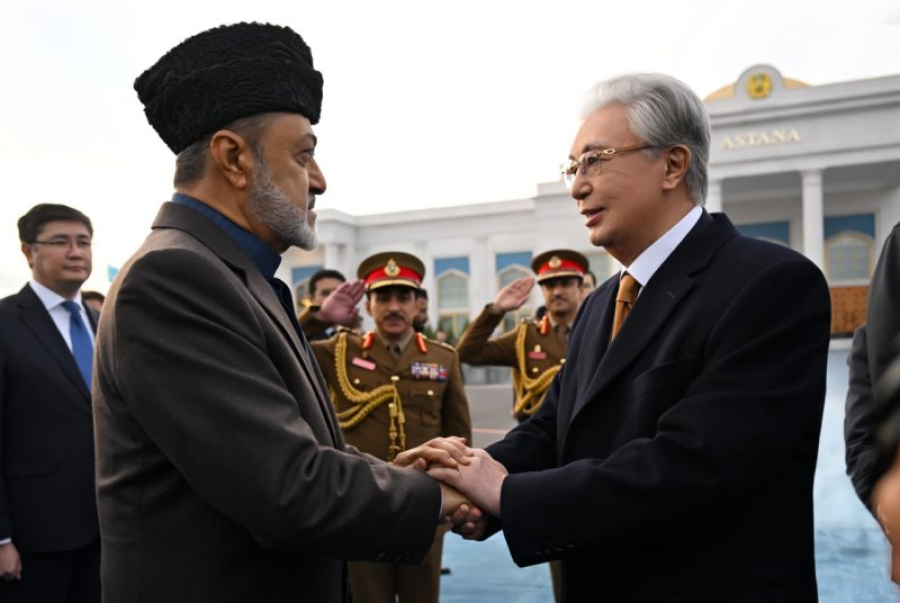
The chances of spotting a black, red, and green flag with a Maasai spear and shield somewhere in Astana are extremely slim — but never zero. Thirty-three years of diplomatic relations and not a single high-level meeting until today. Any minute now, Kenyan President William Ruto will arrive at the Palace of Independence for the first-ever state visit between the two nations. The motorcade is approaching, and the guard of honor is already in place.
President William Ruto arrived accompanied by First Lady Rachel Ruto. What followed was protocol as usual: introductions to the delegations, the official welcome report, and the national anthems of both countries.
KAZAKHSTAN AND KENYA STRENGTHEN COOPERATION
Relations between the two countries date back to 1993. However, the real starting point for the current rapprochement came in 2023, when the two leaders met in person for the first time on the sidelines of the UN General Assembly in New York. Ruto described his visit as a deliberate step toward strengthening cooperation. And the logic is clear: two countries sitting at the negotiating table, each with much to offer the other.
Kassym-Jomart Tokayev, President of the Republic of Kazakhstan:
- Kazakhstan is located at the heart of Eurasia, while Kenya serves as the economic hub of East Africa. This creates significant opportunities for expanding bilateral partnership. Together, we are capable of building a strong bridge between Central Asia and Africa by connecting markets, transport routes, and investment flows.
In an era of global instability, having alternative routes and reliable new partners is highly advantageous. For Kazakhstan, Kenya represents access to the Indian Ocean, a new corridor toward Africa and beyond. For Kenya, Kazakhstan is a gateway to Eurasia.
Ruto himself stated this directly.
William Ruto, President of Kenya:
- We see Kazakhstan as an entry point to the Eurasian region — a vast market of great interest for the export of our key agricultural products.
Kenya is an agricultural country. Tea, coffee, flowers, and spices are produced there on an industrial scale. The country ranks third in the world in tea production and first in tea exports. In fact, these are precisely the products Kazakhstan imports from Kenya: flowers, ginger, saffron, and turmeric. In return, Kazakhstan exports sulfur and industrial equipment. Last year, bilateral trade exceeded 50 million US dollars. Both sides are confident this is only the beginning — a point they reaffirmed during a joint press briefing.
Kassym-Jomart Tokayev, President of the Republic of Kazakhstan:
- We exchanged views on the possibility of opening regular direct flights between our countries. Kazakhstan is interested in supplying agricultural products, primarily grain and other goods, to the African market.
Nairobi is ready to become a strategic base for operations across the continent, while the ports of Mombasa and Lamu could serve as logistics gateways to neighboring countries. Ruto confirmed this. Kenya, for its part, is also looking closely at Kazakhstan’s achievements in e-government, space technologies, and IT.
Kassym-Jomart Tokayev, President of the Republic of Kazakhstan:
- During the talks, special attention was also given to cooperation in culture, tourism, education, and science. Kenya places great importance on environmental protection and biodiversity conservation. I would especially like to note that this position aligns with our ‘Taza Kazakhstan’ ideology.
Kenya is one of the global leaders in clean energy, with 90% of its electricity generated from renewable sources. There is much to learn from this experience, and a separate agreement was signed in this area. In total, ten agreements were concluded covering digitalization, logistics, tourism, industry, and other sectors.
To ensure these initiatives do not remain merely on paper, the parties also proposed establishing the Kazakhstan–Kenya Business Council — a platform intended to turn concrete projects into tangible results.
Author: Guldana Kalen