


Kazakhstan and Russia boost bilateral trade turnover
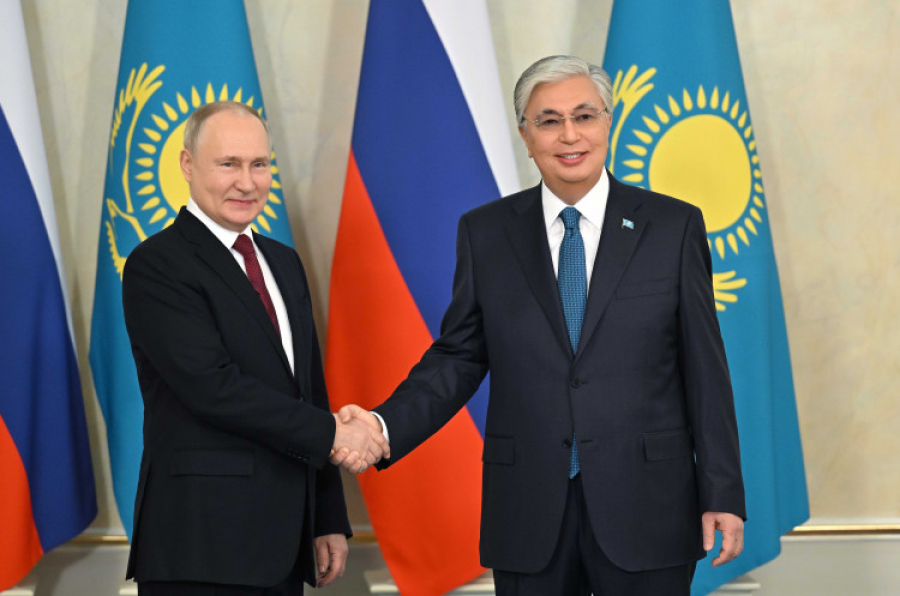
Political scientists believe that Kazakhstan is increasingly asserting its role as a Eurasian transport and logistics hub. This is driven by the country's advantageous geographical location and the development of transit routes between Europe and Asia. Cooperation between Kazakhstan and Russia continues to evolve. Over the past year, trade between the two countries exceeded $27 billion. A «24KZ» correspondent looked into whether further growth in trade turnover between Kazakhstan and Russia can be expected, and which sectors will drive it.
Growth is entirely possible. This is primarily facilitated by close cooperation in industry, energy, and transport, as well as the development of logistics routes between the two countries. But let's look at the details.
Trade turnover between Kazakhstan and Russia grew by nearly 14%. In the first two months, trade between the countries reached $4 billion. Meanwhile, exports decreased by 9.3%. Kazakhstan primarily supplied its neighbor with steel, iron ore and concentrates, aluminum raw materials, gold, and coal. Imports, on the contrary, grew significantly—by 24% at once. Natural gas, petroleum products, electricity, and chocolate were imported from Russia. Experts note that cooperation between the countries continues to strengthen. Astana and Moscow are linked not only by close economic relations but also by long-standing ties in the humanitarian and cultural spheres.
Yersultan Zhanseitov, political scientist:
- Kazakh-Russian relations are consistently at a high level. Our relations are characterized as an alliance, so I believe they will continue along the same path. Kazakhstan plays a very important role for Russia as an ally and a trading partner. The scope of issues is broad—there is always something to discuss.
Industrial cooperation remains one of the main areas of collaboration. New sectors, such as digital technologies and artificial intelligence, are now actively developing. These topics may receive special attention at the upcoming forum. According to the political scientist, unified digital solutions within the EAEU (Eurasian Economic Union) will help remove barriers and make interaction between countries simpler and faster.
Yersultan Zhanseitov, political scientist:
- In this regard, this forum should not end with just general statements and memorandums. We hope that concrete decisions will be made. First and foremost, this concerns not only government-to-business interaction, but also business-to-business—B2B. Such solutions, including those utilizing artificial intelligence, will help entrepreneurs expand their opportunities and gain access to the EAEU market with a population of about 180 million people. Primarily, this should reflect on the well-being of the citizens of Kazakhstan as a member of the Union.
DEVELOPMENT OF TRANSPORT COOPERATION
For Russia, Kazakhstan is an anchor state and a key gateway to Central Asian markets, says Taisiya Marmontova, President of the Institute for Regional Integration Studies. While trade used to be the main foundation of cooperation, today Eurasian transport flows and logistics are taking center stage. Over the year, 92 million tons of cargo were transported by rail, which is 3.5% more than the previous year. The volume of export-import shipments amounted to 8.4 million tons, down 21% compared to 2024. Nearly 2,000 tons of cargo bound for or coming from Russia were handled through the seaports of Aktau and Kuryk.
Taisiya Marmontova, President of the Institute for Regional Integration Studies:
- Alternative routes are being actively developed by Kazakhstan. These include the Trans-Caspian route, shipments via Azerbaijan, and the strengthening of the transport infrastructure at the ports of Aktau and Kuryk. However, it is essential to understand that even diversification attempts cannot yet completely replace the Russian route—neither in terms of volume nor economic efficiency.
KAZAKHSTAN STRENGTHENS ITS ROLE AS A EURASIAN TRANSPORT HUB
Nevertheless, Kazakhstan and Central Asian countries are increasingly asserting their roles as Eurasian transport and logistics hubs. This is due to their advantageous geographical position, thanks to which major trade and transport routes pass through the country. This opinion is shared by Russian political scientist Evgeniya Makhmutova. Special attention is given to the International North–South Transport Corridor. Today, its importance is growing. It is seen as a safer and more resilient alternative, allowing Middle Eastern and Asian countries to maintain trade ties while bypassing problematic segments of supply chains, the political scientist notes.
Evgeniya Makhmutova, Associate Professor at the Department of Political Science, Financial University under the Government of the Russian Federation:
- The Russian side is investing in expanding border roads and rail infrastructure. Checkpoints are also being modernized to accelerate cargo clearance. This work is highly relevant on both the Russian and Kazakh sides due to the increasing logistical load.
KAZAKHSTAN AND RUSSIA STRENGTHEN COOPERATION
Kazakhstan and Russia are connected by the «Central Asia–Center» main gas pipeline system. It was built during the Soviet era and is still used to transport and redistribute natural gas across the region. Thanks to this infrastructure, issues regarding the gas supply to northern and eastern regions are being resolved, says Taisiya Marmontova, President of the Institute for Regional Integration Studies.
Overall, investments are also on the rise. Over the past 20 years, Russia has invested more than $29 billion into Kazakhstan's economy, while Kazakhstan, in turn, has invested around $9 billion. Companies from both nations are actively involved in large-scale projects in industry, energy, transport, and other sectors.
Taisiya Marmontova, president of the Institute for regional integration studies:
- There are interesting projects in agricultural machinery manufacturing, the chemical industry, and the automotive sector. Kazakhstan uses this cooperation as an opportunity to strengthen its own economy and address current development challenges.