

EU and Kazakhstan sign agreements worth $12 billion
Twelve billion dollars and dozens of new opportunities for Kazakhstan’s economy. In Brussels, President Kassym-Jomart Tokayev held a series of meetings with European Union leaders and major European investors, reports «24KZ». The outcome was a number of agreements in industry, agriculture, transport, and logistics, as well as plans to launch new manufacturing facilities.
Bankers, business owners, and heads of industrial corporations gathered around the table-people whose decisions are worth millions of dollars. Some were looking for new markets, others for partners in large-scale projects, while some had already signed deals. One example is an Austrian company that agreed to build a sulfuric acid regeneration plant for KazZinc. Once operational, the facility will be able to fully supply the company with the raw materials it needs and sell any surplus.
Paul Piantino, Senior Vice President of Sales:
- In recent years, sulfuric acid prices have risen significantly. Many companies are seeking to secure their own supplies and reduce dependence on the global market. This is our first project in Kazakhstan. We see great potential here because demand for these technologies is very high. We are already receiving numerous inquiries from local companies.
Another example is a Danish company that will invest in the construction of a modern egg-processing plant in Kazakhstan. The facility will produce liquid egg products and egg powder for the food industry, with a focus on export markets.
Thor Stadil, Chairman of the Board:
- Why Kazakhstan? Because production costs are crucial in the egg industry, and they largely depend on the cost of poultry feed. Feed accounts for around 60 percent of the cost of an egg. Kazakhstan has the capacity to produce feed at relatively low prices, which means eggs can also be produced more cheaply here.
European businesses’ interest in Kazakhstan is easy to understand. The country’s economy is growing, and its key advantage is its strategic location between Europe and Asia. That is why Kazakhstan is placing a strong emphasis on developing transport corridors. Over recent years, tens of billions of dollars have been invested in roads, railways, and logistics infrastructure. A special role is assigned to the Trans-Caspian International Transport Route, which passes through Kazakhstan.
Kassym-Jomart Tokayev, President of Kazakhstan:
- The modernization of transport infrastructure has already produced impressive results. Over the past six years, cargo volumes along this route have increased fivefold, reaching more than four million tons annually. Our goal is to increase its capacity to ten million tons.
Kazakhstan is also among the countries with significant reserves of critical raw materials. The country is already prepared to supply 21 out of the 34 materials that the European Union considers strategic. At the same time, the focus is not only on extraction. Kazakhstan is proposing the development of processing facilities and joint manufacturing projects within the country, especially as its industrial sector continues to expand.
Kassym-Jomart Tokayev, President of Kazakhstan:
- We have launched more than 190 new production lines. It is highly encouraging that European companies are actively participating in the development of our industry. Economic cooperation between Kazakhstan and the EU has undergone a fundamental transformation, shifting toward deeper localization and the integration of high-value-added production chains.
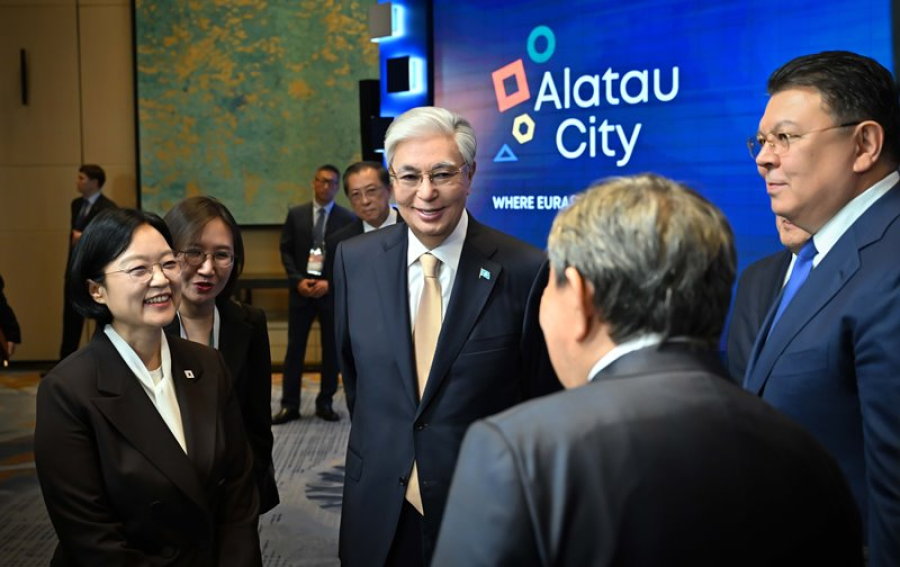
New technologies are also among the priorities. Kazakhstan is investing in artificial intelligence, data centers, and digital infrastructure. Construction is underway on the smart city of Alatau, which is expected to become a hub for high-tech businesses and innovative projects.
Kassym-Jomart Tokayev, President of Kazakhstan:
- Kazakhstan became the first country in the region to launch two supercomputers powered by Nvidia, a global leader in technological innovation. In addition, we initiated the Data Center Valley project, which is rapidly attracting global capital and major technology companies. Through the Alem.ai International Center, we have launched two next-generation international schools—Tumo and Tomorrow School.
Astana’s message is clear: Kazakhstan is ready to expand cooperation with Europe across a wide range of sectors, including logistics, industry, and artificial intelligence. The challenge now is to transform today’s agreements into concrete projects and investments.
Authors: Raul Gabitov, Askhat Serikuly, and Dulat Yentebekov