


Kazakhstan, Türkiye, Uzbekistan, and Azerbaijan to launch joint satellite
In Astana, a joint IT hub for Turkic countries may be established at the Alem AI artificial intelligence center. The platform would bring together specialists to develop shared technological projects, including digital services. The initiative was announced by President Kassym-Jomart Tokayev during the informal summit of the Organization of Turkic States in Turkistan. He proposed naming the new center Turkic AI.
This was just one of several initiatives voiced during the meeting. The leaders also discussed joint space projects, digital integration, and training specialists for a new technological era. Following the summit, the heads of state of the OTS member countries signed the Turkistan Declaration, reports the correspondent of «24KZ».
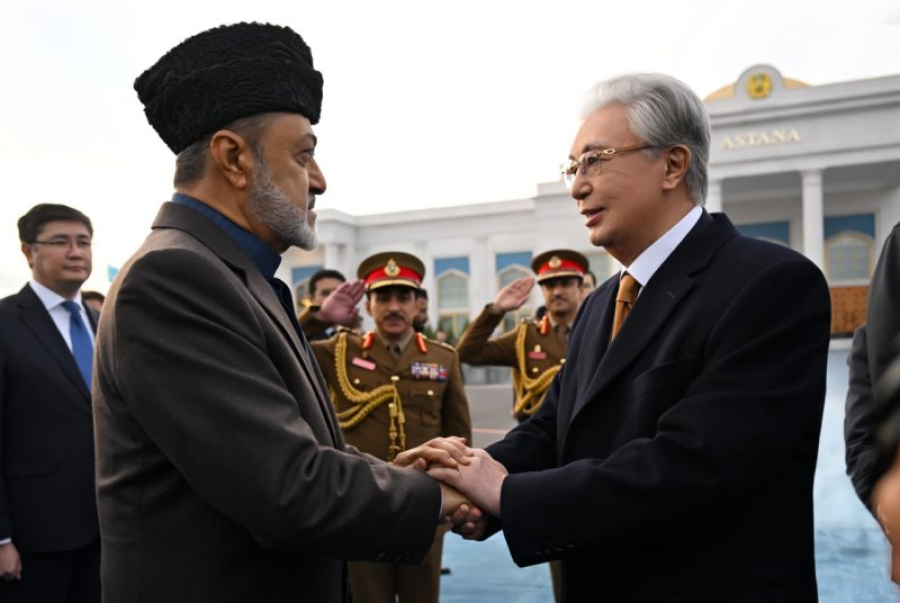
One after another, aircraft painted in the colors of national flags landed at the Turkistan airport. Descending the stairs were Recep Tayyip Erdoğan, Sadyr Japarov, Ilham Aliyev, and Shavkat Mirziyoyev. An honor guard, flowers, greetings — and straight into the motorcade. The schedule was packed and time was limited.
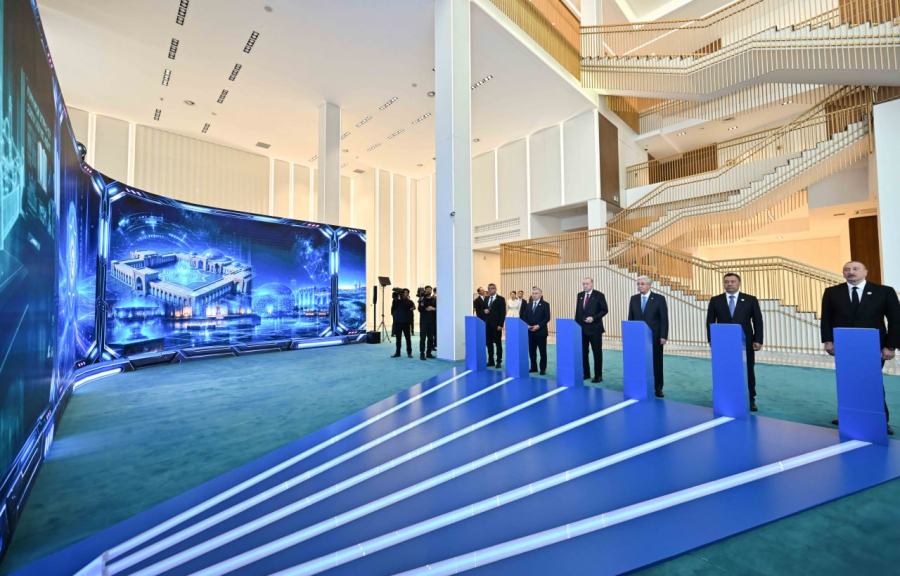
At the congress center, the guests were welcomed by Kassym-Jomart Tokayev. Within minutes, the leaders gathered for a group photo — the Turkic five united. Around 500 journalists followed the meeting, while several Turkic languages could be heard throughout the press center.
Over recent years, the Organization of Turkic States has changed significantly. What once resembled a club for discussing shared historical and cultural issues is gradually turning into an alliance focused on concrete projects and joint development. Today’s agenda reflected that shift. Although the summit was informal, its topics were highly practical — artificial intelligence and future technologies.
According to political analyst Rasul Kospanov of the National Analytical Center, Kazakhstan has become a driving force behind Turkic integration.
Rasul Kospanov, political analyst at the National Analytical Center:
- Kazakhstan has a strong school of IT specialists. In the field of artificial intelligence, we have advanced further than our colleagues in other Turkic countries. We have already offered Pakistani partners a language model in their language, and a model for the Turkish language is currently being developed. Kazakhstan is also home to the Baikonur Cosmodrome, which could be of interest to Turkish engineers.
Kazakhstan indeed has substantial expertise to share in this field. A «golden visa» program has already been launched for foreign entrepreneurs, investors, and specialists. The country has adopted a Digital Code and enacted a law on artificial intelligence. At the same time, educational initiatives are expanding.
Bauyrzhan Auken, an expert at the Asian Studies Department of the Kazakhstan Institute for Strategic Studies, noted that holding the summit in the cultural capital of the Turkic world was an important achievement for Kazakhstan’s foreign policy.
Bauyrzhan Auken, expert at the Asian Studies Department of the Kazakhstan Institute for Strategic Studies:
- By organizing the summit in Turkistan, Kazakhstan is raising issues relevant not only to the Turkic world, but to the entire global community.
The Turkistan summit could become the starting point for new joint projects. Among the initiatives discussed were the mutual recognition of electronic documents and digital signatures. A separate section focused on the space industry.
Kassym-Jomart Tokayev, President of the Republic of Kazakhstan:
- Our countries possess sufficient scientific, technological, and financial potential for the systematic development of this sector. It is especially important to expand cooperation through joint projects in satellite communications, navigation, and monitoring. This will strengthen technological independence and increase innovative capacity. As an example, he cited the launch of the CubeSat 12U scientific satellite.
Cooperation among OTS countries is already yielding tangible results in the space industry. Partnering with Uzbekistan, Türkiye, and Azerbaijan, Kazakhstan is working to create a CubeSat scientific satellite, with its launch scheduled for next year.
To make such projects successful, a strong foundation of knowledge and human capital is essential. Kazakhstan therefore proposed developing a network of educational and research centers to train specialists for the digital economy.
Tokayev also announced plans to establish a next-generation artificial intelligence university.
Kassym-Jomart Tokayev, President of the Republic of Kazakhstan:
- We are ready to allocate special grants for citizens of Turkic states. I also believe it would be beneficial to hold an annual scientific and technological olympiad for young people from Turkic countries in programming, artificial intelligence, and digital technologies. The Turkic Investment Fund could potentially provide financial support for these initiatives.
Another proposed step is the integration of existing IT platforms. Each OTS country already operates its own technology parks, but leaders are now considering the creation of a unified center. The new hub could be established in Astana at the Alem AI center under the name Turkic AI.
The summit participants also discussed creating a digital platform dedicated to preserving the history and heritage of Turkic peoples. The platform would operate in multiple languages and be accessible worldwide.
Kassym-Jomart Tokayev, President of the Republic of Kazakhstan:
- It is necessary to intensify efforts to create an AI-based digital platform that will accumulate materials on the history and culture of Turkic peoples. The project should be implemented in a multilingual format so that any user can explore the heritage of Turkic civilization online. Kazakhstan is ready to offer comprehensive digital solutions.
As the summit concluded, delegations departed Turkistan and the city gradually returned to its usual rhythm. However, the decisions discussed are only beginning their path toward implementation. In essence, the Turkic countries are defining the resources and competencies with which they will enter the economy of the future. And Turkistan — a city that has united the region through shared history for centuries — may now become the birthplace of its new digital vector.