

AI and digital economy take center stage at EAEU forum in Astana
Artificial intelligence, the digital economy, and new rules for Eurasian integration became some of the key topics at the 5th Eurasian Economic Forum in Astana, reports «24KZ».
The EAEU member states and observer countries adopted a joint statement on the responsible development of artificial intelligence. The parties agreed to develop unified approaches to economic digitalization and the safe implementation of AI technologies.
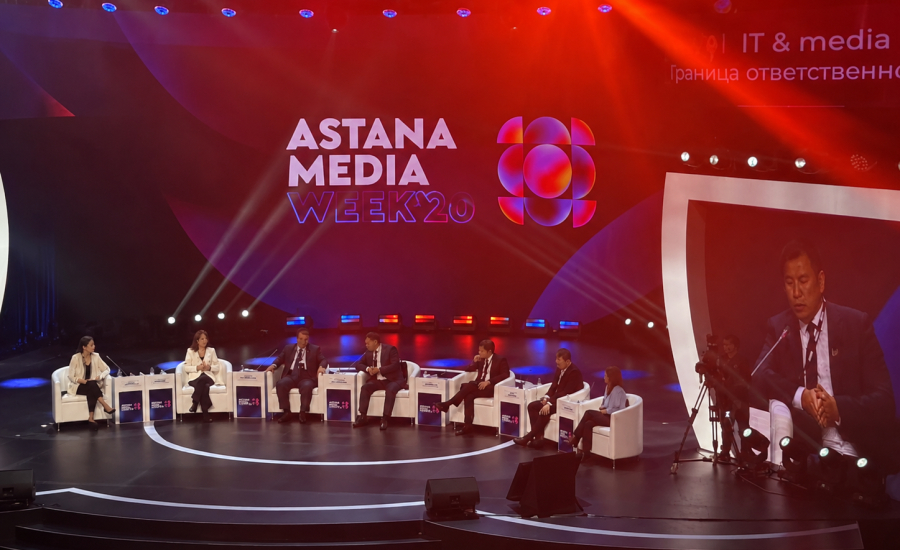
From early morning, the capital’s Congress Center resembled a huge beehive operating without interruption. Representatives of EAEU countries, as well as observer states, including Cuba, gathered at the venue. Without exaggeration, the economic future of the Eurasian space was being shaped there. Panel sessions, closed-door meetings, and bilateral talks continued almost nonstop. Ministers, major businesses, international organizations, and leading experts actively built new bridges of cooperation. Discussions covered logistics, mutual trade, and joint industrial projects. The final word in these discussions was delivered by the heads of state.
Opening the forum, President of Kazakhstan Kassym-Jomart Tokayev stressed that the summit was taking place during a period when the global economy is facing severe turbulence. Traditional crises have overlapped with a large-scale digital transformation that will soon completely rewrite the rules of the game. Although coordinated efforts have helped EAEU countries maintain stability, the era of total transformation leaves no room for delay. The Union now faces a strategic task — strengthening its potential and learning to respond collectively to global challenges. One of the main challenges is the rapid development of artificial intelligence, which is already changing not only business, but also the traditional labor market.
Kassym-Jomart Tokayev, President of the Republic of Kazakhstan:
- According to IMF estimates, around 40% of jobs worldwide may be reduced in the coming years as artificial intelligence technologies are introduced into the global labor market. Naturally, hundreds of millions of people around the world will need retraining and new skills and knowledge. That is why, during its chairmanship in the Eurasian Economic Union bodies, Kazakhstan proposed the practical use of artificial intelligence technologies to ensure the ‘four freedoms’ within the Union and strengthen the competitiveness of member states.
Kazakhstan is not merely proposing these initiatives — it is already testing this future itself. The year 2026 has officially been declared the Year of Artificial Intelligence and Digital Development in the country.
The republic has launched two supercomputers, is building a massive data center valley, and has enshrined the protection of personal data online at the constitutional level. Astana is now creating a powerful digital hub and proposes extending this experience across the Eurasian space. Several concrete proposals made by Tokayev concern the integration of smart platforms into EAEU logistics and trade systems.
Kassym-Jomart Tokayev, President of the Republic of Kazakhstan:
- To accelerate customs procedures, it is important to strengthen cooperation between national digital systems. This will make it possible to process all documents in real time, identify bottlenecks, and forecast cargo flows. Mutual recognition of digital signatures will radically reduce business costs and increase trade volumes within the EAEU. The analytical potential of artificial intelligence is also of great practical importance for expanding industrial cooperation.
Another strategically important area for applying digital intelligence is agriculture. According to the President, the introduction of intelligent systems into the agro-industrial sector should become a priority for strengthening the Union’s food security. Kazakhstan has proposed that partners integrate shared databases.
Dmitry Moon, vice minister of Artificial Intelligence and digital development of Kazakhstan:
- If all countries unite within an official framework and provide these data sets so that scientific research institutes can use them to train sovereign models capable of understanding our land, our climate, and other local specifics, then it will be possible to create models that can advise farmers on what needs to be done and help increase crop yields by 5% through AI-driven recommendations.
Other leaders of the Union also supported Astana’s digital initiatives. The active and comprehensive use of new technologies will become a key driver of strong economic growth for all participating states.
Sadyr Japarov, President of the Kyrgyz Republic:
- We understand that AI has no national borders. The EAEU space has enormous potential in this regard. Our countries are united by deep historical ties and common economic interests.
Vladimir Putin, President of the Russian Federation:
- We fully understand and realize that joint work with our friends and partners is of enormous importance. Combining efforts produces tremendous results and a powerful synergistic effect.
The ultimate goal of implementing digital technologies is a stronger economy: GDP growth and higher business revenues. Today, Eurasian integration is primarily a race for speed and new markets. The Union continues to expand its reach: agreements with Vietnam, Serbia, and the UAE have already been launched, while Pakistan and South Africa are next in line. Under these conditions, Kazakhstan is positioning itself at the center of key transit routes.
Bakytzhan Sagintayev, chairman of the board of the Eurasian Economic Commission:
- Cargo leaving China passes through Kazakhstan, crosses the Caspian Sea, and then moves onward toward Europe.
Kazakhstan’s transit status is already translating into concrete results. Over the past 11 years, the country’s mutual trade with Union partners has grown by nearly 90%, surpassing $30 billion. Domestic exports to the Eurasian market have almost doubled, reaching a solid $10 billion. The strongest growth has been seen in investments, with inflows into the economy increasing fivefold. These figures could rise even higher if artificial intelligence is actively introduced into the real sector of the economy.
Guldana Kalen, correspondent:
- The heads of state gathered here in Astana unanimously agreed that new technologies will become the main driving force of the Eurasian economy. And this is not merely a declaration of intent. The foundation for major digital cooperation will be the joint statement on the responsible development of artificial intelligence. Through this document, the Union countries are essentially establishing common rules of the game: how to safely implement neural networks in key industries and protect mutual interests.
Authors: Guldana Kalen, Askhat Serikuly, Doskhan Koran with the support of the Presidential TV and Radio Complex