
Why Kazakhstan Produces More Uranium Than Any Other Country
Kazakhstan accounts for around 40% of global uranium mine production, according to the World Nuclear Association, making it the world's largest producer of the metal used to fuel nuclear power stations, 24KZ reports.
The country mined 25,839 tonnes of uranium in 2025, according to national nuclear company Kazatomprom. Its leading position reflects a combination of extensive deposits, favourable geological conditions and a mining method that has helped Kazakhstan expand production over the past two decades. The country has led global uranium production since 2009, supplying a market increasingly focused on energy security and the future of nuclear power.
So how did Kazakhstan become the world's largest uranium producer, and what could threaten its position? Kazakhstan has some of the world's largest uranium resources, but it does not rank first. Australia holds the largest share of identified recoverable resources, while Kazakhstan accounts for around 16%, according to figures published by the World Nuclear Association. The difference lies partly in how the uranium is extracted.
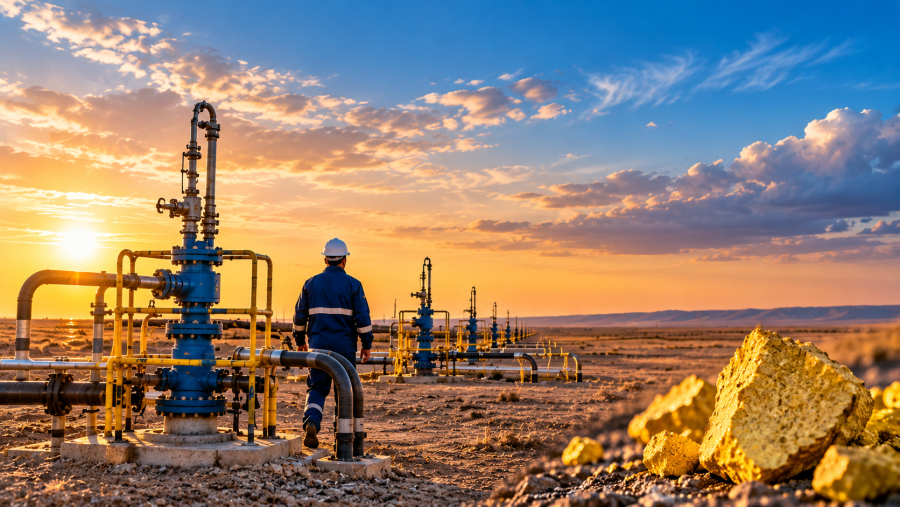
Much of Kazakhstan's uranium is found in sandstone formations that are suitable for in-situ recovery (ISR), a technique that avoids the extensive excavation associated with conventional open-pit or underground mining.
Instead of removing large quantities of rock, operators circulate a chemical solution through uranium-bearing layers underground. The solution dissolves the uranium, which is then pumped to the surface for processing. The method can reduce the need for surface excavation and make production commercially attractive where geological conditions are favourable.
Kazakhstan's deposits, combined with investment in mining infrastructure, have allowed producers to expand output on a scale few other countries have matched.
Kazakhstan's uranium industry dates back to the Soviet period, when exploration identified deposits across several regions. Production expanded rapidly after the establishment of Kazatomprom in 1997 and the development of mining projects involving international partners. In 2001, Kazakhstan produced just over 2,100 tonnes of uranium. By 2016, annual output had reached nearly 24,700 tonnes. The country overtook other major producers in 2009 and has retained its leading position since then. Its uranium industry includes partnerships with companies from Canada, France, China and Russia. These ventures have supported mine development and connected Kazakhstan to international nuclear fuel markets.
Uranium mined in Kazakhstan enters a global supply chain serving nuclear power plants in Asia, Europe and other markets. China is an important commercial partner, while Kazakhstan also supplies customers in Europe and the Americas. According to Kazatomprom's 2025 annual report, Asia accounted for 63% of direct uranium product sales by the company and its trading subsidiary. The Americas represented 20% and Europe 17%. These figures describe the company's sales distribution, rather than the final destination of every tonne mined in Kazakhstan. Uranium also requires further processing before it can be used in most commercial nuclear reactors. After mining, it typically undergoes conversion, enrichment and fuel fabrication, often in different countries. Kazakhstan is seeking to participate in more stages of this process. The Ulba-FA plant in eastern Kazakhstan began producing nuclear fuel assemblies in 2021 and reached its design capacity in 2024.
Kazatomprom expects uranium production across its mining operations, including joint ventures, to reach between 27,500 and 29,000 tonnes in 2026. The forecast would represent an increase from 2025, but production growth faces several constraints. One is the availability of sulphuric acid, a key material used in Kazakhstan's in-situ recovery operations. The company has repeatedly identified acid supply as a factor affecting production plans. Developing new deposits also requires investment in drilling, equipment and supporting infrastructure. Kazatomprom's August 2026 financial update maintained its annual production forecast but revised some cost estimates upwards. These challenges matter internationally because Kazakhstan supplies such a large share of the world's mined uranium.
In-situ recovery generally causes less surface disturbance than conventional mining, but it is not without environmental risks. The chemical solutions used to extract uranium can alter groundwater chemistry within the mining area. Operators must control the movement of these solutions and monitor groundwater to limit contamination beyond the intended extraction zone. Environmental management therefore remains an important consideration as Kazakhstan develops new uranium deposits. The industry's long-term prospects depend not only on production costs and market demand, but also on how effectively these risks are managed.
Uranium is used to produce fuel for nuclear power stations, which generate electricity without the direct carbon dioxide emissions associated with burning fossil fuels. Interest in nuclear energy has increased in countries seeking to strengthen energy security while reducing emissions from electricity generation. That makes reliable uranium supplies important to utilities planning reactor operations years in advance. Kazakhstan's position gives it considerable importance in the global nuclear fuel market, although mining is only one part of a supply chain that also depends on conversion, enrichment and fuel manufacturing. For Kazakhstan, the next challenge is to maintain reliable production while developing more higher-value activities within the nuclear industry. Its lead in uranium mining is well established. Turning that position into broader industrial growth will depend on investment, environmental safeguards and access to international markets.